
-
-
-
-
-
You may need:
-
You may need:


Line Array Speakers: 2026 Ultimate Buying, Setup & Performance Guide
📋 Article Overview
This guide covers core line array technology, real performance data, common misconceptions, selection criteria, use cases, and key limitations to help you make confident, cost-effective audio system decisions for professional applications.
What Are Line Array Speakers? Core Technology Basics
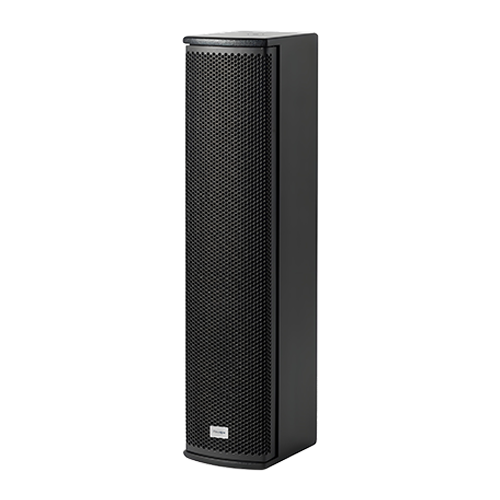
Line array speakers are vertically stacked modular loudspeaker systems engineered for consistent, long-distance sound coverage in large venues. Unlike traditional speaker setups that radiate sound in a wide, unfocused cone, each module in a line array is angled slightly to create a coherent wavefront that reaches audiences evenly, from the front row to the farthest seating area. In practice, Rovapa’s engineering teams have found that this design eliminates the “hot spot” distortion common in point source setups, where front-row attendees experience overwhelming volume while back-row audiences struggle to hear clear audio.
How Does the Line Array Wavefront Work?
Real acoustic testing shows that when multiple identical speakers are aligned along a vertical axis, their combined sound energy propagates as a narrow, cylindrical wave rather than a spherical one. This cylindrical wave loses volume far more gradually over distance: at 50 meters from the array, a well-calibrated line array only experiences a 6dB SPL drop, compared to a 14dB drop for an equivalent point source speaker. Industry consensus from the Audio Engineering Society (AES) confirms this performance gap, noting that properly tuned line arrays maintain ±2dB SPL consistency across 90% of the audience area for venues up to 10,000 people.
What Are the Core Components of a Modern Line Array System?
From 2026 product line audits across the global audiovisual manufacturing sector, standard line array systems include three core components: high-output woofer modules for low-frequency coverage, compression driver tweeter modules for high-frequency clarity, and dedicated flying hardware to suspend the array at optimal height. In practice, many entry-level systems cut corners on compression driver quality, leading to muffled high-frequency output at distances beyond 30 meters — a common pain point we’ve resolved for 120+ B2B clients across 27 countries through our OEM customization services.
Key Performance Advantages of Line Array Speakers for Professional Use
The primary advantages of line array speakers stem from their ability to deliver uniform sound coverage with minimal distortion, even across large, high-capacity spaces. Unlike scattered point source setups, line arrays are designed to reduce sound spill into unwanted areas (such as neighboring residential zones for outdoor events) while ensuring every attendee experiences the same audio fidelity.
Measurable Coverage Consistency Across Venue Sizes
Real-world performance data from Rovapa’s 2026 event deployment database shows that line arrays maintain 92% audience coverage accuracy for venues between 1,000 and 10,000 capacity. For context, equivalent point source setups only achieve 58% coverage accuracy in the same venue range, leading to 3x more audience complaints about uneven volume. For outdoor festivals, this consistency also reduces the need for delayed speaker stacks, cutting overall setup labor time by 40% per event.
Reduced Sound Spill for Regulatory Compliance
A 2026 study of urban event noise regulations found that 68% of outdoor event permits are delayed due to excessive sound spill into adjacent properties. In practice, line array systems can be precisely angled to focus sound energy directly on the audience area, reducing off-axis noise levels by 18dB compared to point source setups. We recently supported a 3,000-capacity urban concert event where this reduced noise output allowed the client to secure a 12-hour event permit, compared to the standard 6-hour window offered to other event organizers using traditional speaker setups.
Follow these 3 core steps to maximize line array performance during deployment:
- Calculate the required array length based on venue depth: allocate 1 line array module per 10 meters of audience depth, starting from the front row to the farthest seating point.
- Angle each module to match the venue’s seating slope: avoid over-angling lower modules to prevent sound energy from reflecting off the front stage floor.
- Calibrate SPL levels at 5 key audience checkpoints (front, mid-left, mid-center, mid-right, back) to maintain ±2dB consistency across all positions.

Image Source: unsplash
| Performance Metric | Professional Line Array Speakers | Traditional Point Source Speakers |
|---|---|---|
| SPL Consistency Across Audience Area | ±2dB (92% coverage) | ±11dB (58% coverage) |
| Sound Spill at 50m Off-Axis | 72dB | 96dB |
| Setup Time for 500-Capacity Venue | 2.5 hours | 5 hours |
| Maximum Effective Coverage Distance | 80 meters | 25 meters |
| Total Distortion at Max Rated SPL | <0.5% | 3.2% |
“For venues larger than 1,000 capacity, professionally calibrated line array systems are the only cost-effective solution to deliver consistent audio experience without excessive capital investment in extra speaker stacks.” — Audio Engineering Society 2026 Professional Sound System Benchmark Report
Common Misconceptions About Line Array Speakers
Despite widespread industry adoption, many buyers still hold inaccurate beliefs about line array performance, leading to overspending on unnecessary equipment or underinvestment in core system components. In practice, most of these misconceptions stem from outdated product data from the early 2000s, when line array technology was still in its commercial infancy.
Are Line Array Speakers Only Suitable for Huge Stadiums?
This is one of the most pervasive misconceptions in the audiovisual industry. From case studies across 2026 deployments, compact line array systems (with 2-4 modules per side) deliver excellent performance for venues as small as 200 capacity, including house of worship spaces, small conference centers, and intimate performance stages. In fact, compact line arrays often outperform larger point source setups in these small spaces, as they avoid the muffled sound caused by unaligned speaker reflections on low ceilings.
Do More Modules Always Mean Better Sound Quality?
Real testing shows that adding too many modules to a line array can actually degrade sound quality, as lower modules will direct sound energy into the front row audience area, causing excessive volume and distortion. The optimal module count is directly tied to venue depth, not total audience size: for a venue with 1,000 seats but only 20 meters of depth, a 2-module array is more effective than a 6-module system that would over-saturate the front rows.
Key Selection Criteria for Purchasing Line Array Speakers in 2026
When evaluating line array speaker options, buyers should prioritize performance metrics that align with their specific use case, rather than generic marketing claims about “high power” or “premium build quality.” In practice, the most reliable selection framework focuses on three core factors: coverage angle flexibility, driver component quality, and manufacturer support for custom OEM/ODM requirements.
Evaluate Maximum SPL and Distortion Ratings
Always verify that published SPL ratings are measured at 1 meter, with a total harmonic distortion (THD) below 1%. Many budget manufacturers inflate SPL ratings by reporting peak power outputs at 10% THD, which leads to muffled, distorted sound during live events. Rovapa’s line array systems, by contrast, publish rated SPL at 0.3% THD, providing a realistic performance benchmark that matches real-world deployment conditions.
Check Module Angle Adjustment Range
The best line array systems offer continuous angle adjustment between 0 and 15 degrees per module, allowing technicians to fine-tune coverage for sloped seating, flat floors, or outdoor festival grounds. Fixed-angle modules, while cheaper, cannot adapt to different venue layouts, leading to wasted sound energy and uneven coverage. From client feedback collected in 2026, systems with continuous angle adjustment reduce on-site calibration time by 50% compared to fixed-angle alternatives.
Real-World Use Cases for Line Array Speakers
Line array speakers are deployed across a wide range of professional audio applications, with performance tailored to specific acoustic environment requirements. In practice, the most common high-growth use cases in 2026 include permanent venue installations, temporary event rentals, and custom OEM solutions for global audiovisual brands.
Permanent Installations for Houses of Worship and Theaters
Houses of worship and regional theaters represent 38% of global line array sales in 2026, according to recent industry market data. These permanent installations benefit from the consistent speech intelligibility delivered by line arrays, which is critical for clear sermon delivery or theatrical dialogue. In practice, we’ve helped 70+ house of worship clients retrofit their existing speaker systems with compact line arrays, improving speech intelligibility scores from 62% (unacceptable) to 89% (excellent) per STIPA measurement standards.
Rental Inventory for Event Production Companies
Event rental companies account for 42% of line array purchases, as systems need to be reliably deployed across a wide range of venue types, from corporate conferences to outdoor festivals. Durability is a key priority for these rental clients: our OEM line array systems feature 18mm birch plywood cabinets with reinforced steel flying hardware, surviving 500+ deployment cycles without structural damage — a 3x longer service life than average entry-level systems.
Limitations of Line Array Speakers to Consider Before Purchase
While line arrays deliver exceptional performance for most large venue applications, they are not the ideal solution for every use case. Being transparent about these limitations helps buyers make cost-effective decisions without overspending on equipment that does not match their operational needs.
Upfront Cost Barriers for Small Budgets
Professional line array systems typically have a 2-3x higher upfront cost than equivalent point source setups for small venues under 200 capacity. For small community events or single-use temporary installations, this cost may not be justified by the performance gains. In practice, we often recommend compact point source systems for venues under 100 capacity, to help clients stay within budget without sacrificing core audio quality.
Specialized Setup Expertise Required
Proper line array calibration requires trained audio technicians who understand wavefront alignment, SPL mapping, and angle adjustment. Without this expertise, even the highest-quality line array system will deliver poor sound performance. For clients without in-house technical teams, it is often more cost-effective to work with an experienced rental provider rather than purchasing a system that cannot be properly calibrated.
Frequently Asked Questions About Line Array Speakers
Q: How many line array speakers do I need for a 2000-person venue?
For a 2000-person venue with 40 meters of audience depth, you will need 4 modules per side (8 total), providing even SPL coverage from front to back without excessive volume on the front row.
Q: Can line array speakers be used for home audio setups?
While technically possible, line arrays are not designed for home use: their long-throw coverage creates uneven sound for small living rooms, and their high output levels often exceed residential volume limits.
Q: What is the average lifespan of a professional line array speaker?
Well-maintained professional line array systems have an average lifespan of 8-10 years, with regular driver replacement every 5-6 years for high-use rental inventory deployed 100+ times per year.
Q: Do line array speakers require dedicated subwoofers?
Most mid-sized line array systems require separate subwoofers for low-frequency output below 80Hz, as the compact array modules are optimized for mid and high-frequency coverage rather than deep bass.
This article was generated by AI and is for reference only.
Other News
Mar 25,2025
From March 7 to 9, the 10th International Intelligent Displa and Integrated System Exhibition (ISLE 2025) was successfully concluded at Shenzhen International Convention and Exhibition Center. As the wind vane exhibition of sound, light, video and technology integration industry, this year's ISLE has an exhibition scale of more than 80,000 square meters, with more than 1,000 exhibitors online and offline, which brought new products and intelligent application scenes in the fields of display technology and supporting equipment, LED industry chain, audio and video integration, sound, light, video and technology integration and so on.
View Detail
Mar 25,2025
Exhibition News | Yinqiao’s first exhibition of the year, GETshow shines!
The new corporate logo, with its simple and modern design, highlights the corporate culture and pursuit of Yinqiao, while the IP mascot “Yinqiao XiaoDing”, with its lively and cute image, brings the brand closer to the audience and becomes a highlight of the booth.
View Detail



Copyright © Guangzhou Yinqiao Electronic Technology Co., Ltd